P.E. Nyavor
Every January 1st, while the world is busy counting down resolutions and setting goals, the Catholic Church begins the new year by turning our eyes to a Mother. Not just any mother, but Mary, Mother of God—a title that is both tender and theologically weighty. This day is not about Mary “stealing the spotlight.” It is about protecting the truth of who Jesus is, and then letting that truth shape how we start the year.
If you’ve ever wondered why the Church celebrates Mary on New Year’s Day, here’s the heart of it: to celebrate the mystery of Christ—true God and true man—and the unique role Mary played by freely welcoming Him into the world.
What the Church Celebrates on January 1st
The Church calls this celebration the Solemnity of Mary, the Mother of God. A solemnity is the highest rank of feast in the liturgical calendar—so this is not a “small Marian day.” It is a major celebration of the Incarnation: God entering human history.
Mary is honored because she is the mother of Jesus Christ, and Jesus is one divine Person. The Church is saying something precise:
Mary is not the source of Jesus’ divinity.
Mary is truly the mother of Jesus’ humanity.
But because Jesus is one Person (not two), Mary is rightly called Mother of God—meaning mother of God the Son made man.
This title is not sentimental poetry. It is a safeguard for the Gospel.
“Mother of God” Isn’t About Mary Alone—It’s About Jesus
Early Christians faced a serious question: Who exactly is Jesus? Some tried to divide Him—almost like saying Jesus is a human person “carrying” God, instead of God truly becoming man. If that were true, Mary would only be “mother of the human Jesus,” not mother of God.
But Scripture insists that the One Mary carried is not merely a holy messenger. He is God-with-us. Matthew interprets Jesus’ birth through Isaiah’s prophecy:
“They shall call his name Emmanuel” (Matthew 1:23)
(which means “God with us,” as Matthew explains)
And Luke records the angel’s words to Mary:
“The Holy Spirit will come upon you… therefore the child to be born will be called holy, the Son of God.” (Luke 1:35)
So the Church’s logic is thoroughly biblical:
If Jesus is truly God, and Mary is truly His mother according to the flesh, then Mary is rightly called Mother of God—not because she created God, but because she bore God made man.
Elizabeth’s Spirit-Filled Revelation: “The mother of my Lord” (Luke 1)
One of the most beautiful biblical foundations for this title happens during Mary’s visit to Elizabeth. Elizabeth’s words were not ordinary courtesy—they were revelation:
“And why is this granted to me, that the mother of my Lord should come to me?” (Luke 1:43)
This recognition was not Elizabeth’s personal guess. Scripture tells us how it happened:
“Elizabeth was filled with the Holy Spirit…” (Luke 1:41)
So yes—this is best understood as a Spirit-given revelation: God opens Elizabeth’s eyes to recognize the identity of the Child Mary carries, and therefore the unique dignity of Mary’s motherhood.
“My Lord and my God” — Jesus receives divine worship (John 20)
After the Resurrection, the Apostle Thomas gives one of the clearest declarations of Christ’s divinity in the New Testament:
“My Lord and my God!” (John 20:28)
Jesus does not correct Thomas. He receives this confession and affirms faith:
“Because you have seen me, you have believed…” (John 20:29)
This matters because it links directly to Luke 1:43:
Elizabeth says Mary is “the mother of my Lord.”
Thomas calls Jesus “my Lord and my God.”
The One Mary bore is the same Lord whom the apostles confess as God. That is why the Church can confidently say Mary, Mother of God.
“God sent forth his Son, born of woman” (Galatians 4)
St. Paul summarizes the Incarnation with striking simplicity:
“God sent forth his Son, born of woman…” (Galatians 4:4)
Notice what Paul holds together:
God’s eternal Son is truly sent by the Father, and truly born in human history. That “woman” is Mary. The Church begins the year celebrating this mystery: the eternal Son truly entered time through her.
The Gospel Mood of January 1st: Peace, Blessing, and a New Beginning
New Year’s Day can carry a strange mix of emotions: hope, anxiety, regret, excitement, uncertainty. The Church meets all of that with the image of Mary holding Christ. It is as if the liturgy says: before you plan, before you hustle, before you fear—first receive the blessing of God’s presence.
This solemnity frequently draws our hearts toward:
- Blessing: God’s favor and protection over His people
- Peace: not just “no problems,” but deep wholeness rooted in God
- Contemplation: Mary, who treasures and ponders God’s work, teaches us how to begin again
Mary is not an escape from reality. She is a guide into it—into a life where Christ is at the center.
Starting the Year With These Nuggets
Mary’s life contains a quiet wisdom that challenges the way the world usually begins a new year.
Mary teaches receptivity before productivity
Modern culture often starts the year with pressure: “New year, new you.” Mary begins with a different posture: “Let it be done to me…” Faithful transformation begins not with self-invention, but with surrender to grace.
Mary teaches courage in uncertainty
Mary’s “yes” did not come with a complete life map. It came with trust. If you are stepping into a year filled with unanswered questions, Mary is a powerful companion.
Mary teaches that holiness happens in the ordinary
Mary carried God in her body, then raised Him in a home, in routines, in daily responsibilities. God meets people not only in dramatic moments, but in steady faithfulness.
The Summit
The Solemnity of Mary, Mother of God is the Church’s way of beginning the year with the most important truth: God is with us, truly and personally, in Jesus Christ. Mary stands at the doorway of that mystery—not as the destination, but as the one who points us to Him and teaches us how to receive Him.
So on January 1st, Catholics do something quietly radical: we start the year not with a checklist, but with a cradle. Not with self-reliance, but with grace. Not with fear of what is coming, but with the confidence that God has already entered our story.
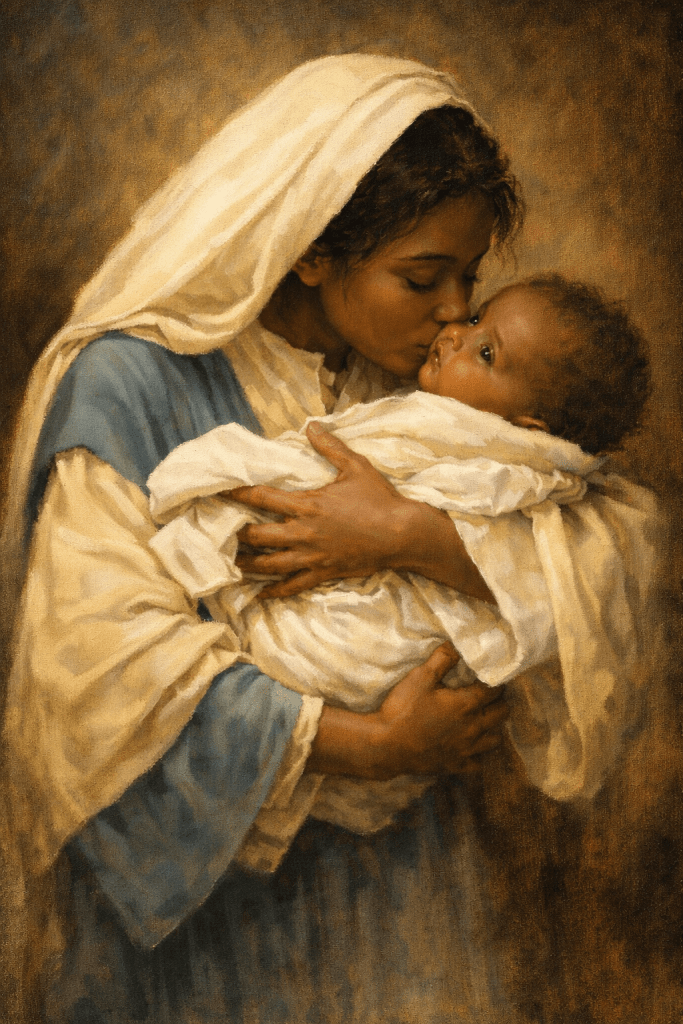
Happy New Year—and may Mary, Mother of God, lead you closer to Jesus in every step ahead.
 Moments & Musings
Leave a reply to Moments & Musings Cancel reply